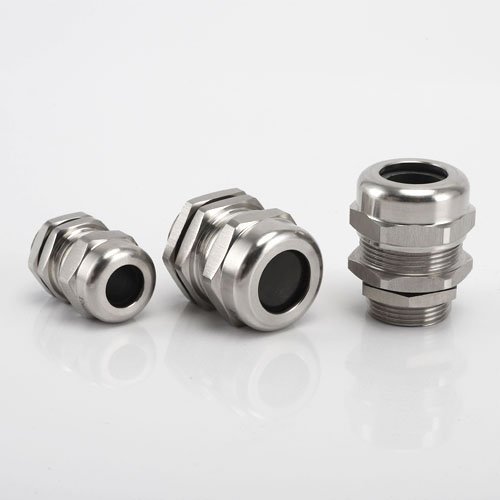
A waterproof cable gland is often treated as a small fitting, but in outdoor cabinets, chemical equipment and coastal installations it becomes one of the most important sealing points. Once water, salt spray or corrosive vapor enters through the cable entry, terminals and control boards can fail long before the enclosure itself looks damaged.
Where stainless steel cable glands are worth using
Stainless steel cable glands are normally selected when corrosion resistance matters more than the lowest unit cost. Typical projects include marine equipment, coastal lighting cabinets, chemical dosing systems, food processing equipment, outdoor control boxes and washdown areas. In these sites, the gland body must resist corrosion while the sealing ring keeps pressure around the cable jacket.
If a cabinet is installed near seawater, in a factory using cleaning agents, or in a place where water is sprayed during maintenance, a plastic or plated brass gland may still work for light duty, but stainless steel gives the buyer a wider safety margin.
304 or 316 stainless steel?
Grade 304 stainless steel is suitable for general outdoor and industrial use where moisture is present but chloride exposure is not severe. It is a practical choice for many control cabinets, machinery panels and sheltered outdoor enclosures.
Grade 316 stainless steel is preferred for marine, coastal and chemical environments. The added molybdenum improves resistance to chloride attack, salt spray and pitting corrosion. If the installation is near seawater, uses cleaning chemicals, or sits in a plant with corrosive vapor, specify 316 instead of relying on appearance alone.
For purchasing, the safest method is to confirm the stainless grade in the quotation and packing documents. 304 and 316 can look similar after machining and polishing, so the material grade should be confirmed before mass order.
IP rating still depends on installation
An IP-rated stainless steel gland only performs correctly when the thread, washer, cable OD and tightening process are matched. The sealing ring must compress evenly around the cable jacket, and the panel-side gasket must sit flat against the enclosure wall. A mismatched cable diameter, damaged cable sheath or loose locknut can reduce the real sealing result even when the product itself is rated IP68.
For outdoor rain and washdown, many projects use IP66 or IP67. For equipment that may be flooded, buried, or exposed to standing water, the buyer should ask about the IP68 test condition, because depth and duration are part of the real protection requirement.
Check thread type before ordering
Metric, PG and NPT threads are not interchangeable. Before ordering, confirm the mounting hole or thread standard on the enclosure. For new panels, many buyers use metric cable glands with locknuts because the selection is wide and easy to match with international equipment. For existing equipment, measure the thread and panel thickness first.
If the thread is wrong, installers may force the gland into the hole. That can damage the thread, tilt the gasket, and create a leak path. Thread confirmation is a small step, but it prevents many field problems.
Seal material and cable range matter
The stainless steel body provides strength and corrosion resistance, but the rubber seal decides whether water can travel along the cable. Confirm the cable outside diameter is inside the gland clamping range, ideally not at the extreme minimum or maximum. For oil, fuel, high temperature or chemical exposure, ask whether the standard seal material is suitable or whether another sealing material is needed.
Also check cable jacket condition. A scratched or oval cable jacket may not seal evenly even if the cable size is technically inside the gland range.
Common field problems
If water appears inside the cabinet after rain, check the panel gasket and the cable jacket before replacing the whole enclosure. If a gland loosens after vibration, confirm the locknut engagement and whether the thread length is enough for the wall thickness. If corrosion appears around the gland body, review whether 304, 316 or nickel-plated brass was used in the actual environment.
For repeated failures, take photos of the inside of the enclosure, the cable entry, the locknut side and the cable jacket. These details help identify whether the issue is material, installation or size selection.
Information to send for quotation
For faster selection, send the thread size, cable outside diameter, panel thickness, required stainless steel grade, quantity, IP requirement and working environment. Photos or drawings of the cabinet entry point help confirm whether standard thread or long thread cable glands are more suitable.
If your project requires 316 stainless steel, special seal material, long thread, or matched locknuts and washers, include those requirements at the RFQ stage so the quotation can be prepared correctly.