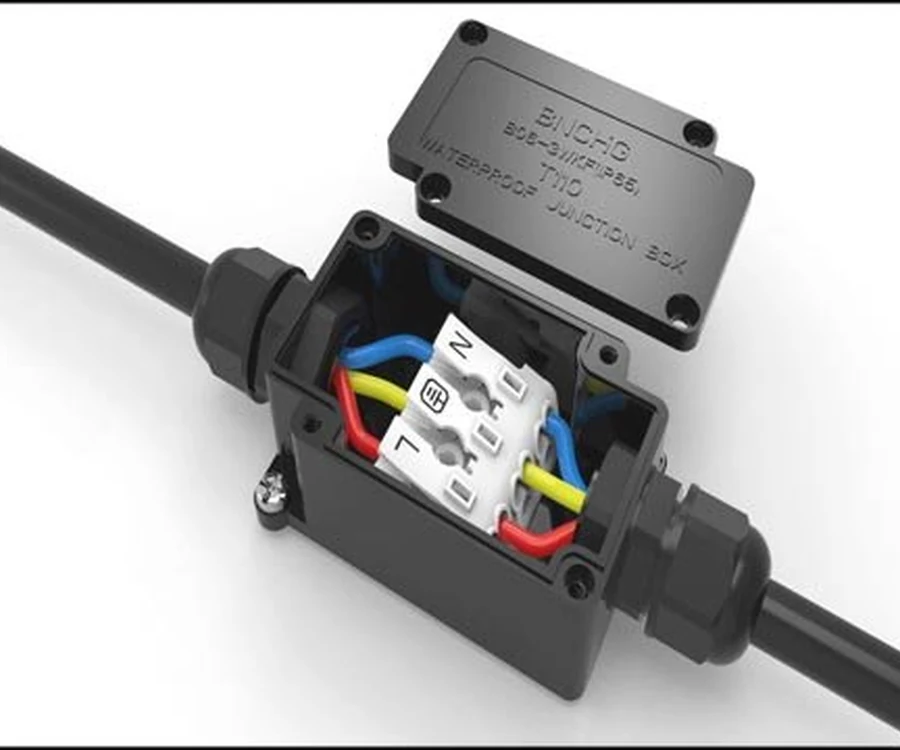
Many buyers think a junction box under an eave only needs basic splash resistance. In real installations, wind-driven rain, condensation, dust and insects can still reach the cable entry point. If the cover gasket or cable gland is loose, water can collect inside the box over time.
Box sealing is a system
The box cover gasket, cable glands, washers, plugs and unused holes must work together. A high IP box can still leak if a cable hole is punched badly, a spare entry is left open, or the gland does not match the cable OD.
Why IP68 may still matter on a wall
A wall-mounted junction box can face horizontal rain, cleaning water, condensation and dust accumulation. When the box is used for outdoor lighting, CCTV, pump wiring or garden power distribution, the cable entry point is often lower than the cover, so water can sit around the gland.
ABS, PA66 and outdoor service
Plastic material should be chosen according to the environment. ABS can be cost effective for sheltered use, while PA66 is often preferred where impact resistance, heat and outdoor service are more important. The final choice depends on box size, installation location and expected maintenance cycle.
Glands decide whether the box stays dry
The cable gland must match the cable diameter and thread hole. If installers remove a knockout roughly, install the wrong thread, or forget a washer, the box can leak even if the cover gasket is good. Spare holes should be closed with proper stopping plugs, not tape or temporary sealant.
What to check before installation
Confirm the number of cable entries, box size, terminal space, cover screw torque and gland size. Outdoor junction boxes should also leave enough room for cable bending and future maintenance.
For quotation, send the cable count, cable OD, wiring direction, box size requirement, current load and outdoor environment. Voltaglands can match waterproof junction boxes with cable glands, plugs and sealing washers as one set.