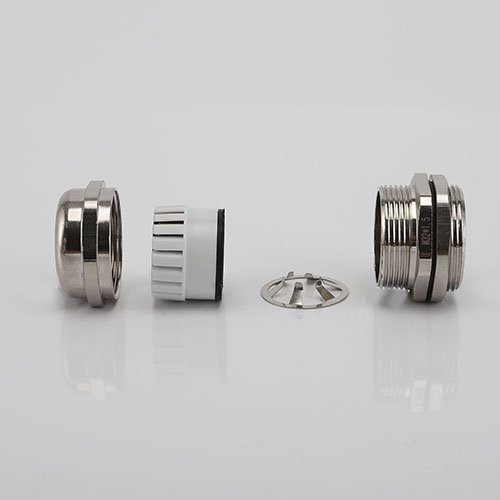
In automation panels, drives, sensors and communication equipment, cable shielding must connect reliably to the enclosure. EMC cable glands are designed to make that shielding contact while still providing cable sealing and strain relief.
Where EMC glands are used
Common applications include control cabinets, industrial automation, telecommunications, power equipment and machinery with sensitive signal cables. The gland should match the shielded cable structure and the cabinet grounding design.
What problem does an EMC gland solve?
A normal waterproof cable gland can hold and seal the cable, but it may not provide reliable contact between the cable shield and the enclosure. In systems with drives, sensors or communication lines, poor shielding can cause unstable signals, interference or unexpected equipment behavior.
Material and structure
EMC cable glands are commonly made from nickel-plated brass with conductive contact parts, clamping components and sealing rings. The body provides mechanical strength, the seal protects against dust and water, and the contact structure helps connect the cable shield to the cabinet.
Selection points
Confirm thread type, cable outside diameter, shield structure, cabinet wall thickness and IP requirement. The installer should prepare the cable shield correctly according to the gland design so the contact path is stable.
When to ask for support
If the project involves variable frequency drives, control signals, communication cabinets or equipment with electromagnetic interference concerns, send the cable type and cabinet drawing with the RFQ. Voltaglands can help match the gland size and sealing accessories.