
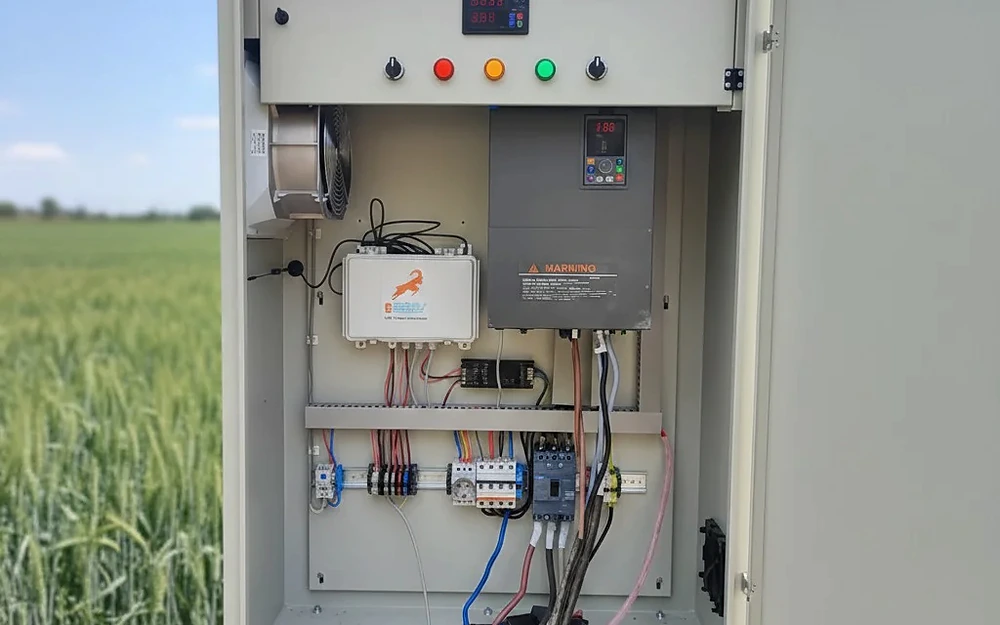
Pump and irrigation controller boxes work in wet and dirty environments. Mud, insects, spray water and cable pulling can all damage a weak cable entry. When a cabinet fails repeatedly, the problem is not always the box size or circuit design. It may be an unsealed hole, loose gland, missing washer or wrong cable range.
Typical leak paths
Check unused holes, cracked washers, cable jackets outside the gland clamping range and poorly tightened locknuts. Field wiring often changes after installation, so spare holes and temporary cable entries must be closed properly.
Why irrigation panels are difficult
Irrigation systems are installed close to soil, sprinklers, pumps and outdoor power cables. Water can splash from below, not only fall from above. Mud can collect around the gland, and insects may enter through small gaps around unused holes.
What a better cable entry setup includes
A practical setup uses waterproof cable glands matched to the real cable OD, sealing washers on the panel side, stopping plugs for spare holes and enough strain relief so cable movement does not pull the seal open. For pump control panels, brass or nylon glands may be selected depending on mechanical strength, cost and corrosion requirement.
Maintenance checks
During maintenance, open the cabinet and look for water marks near the cable entry. If moisture appears below the gland, check the locknut, washer and cable jacket first. If mud is inside the enclosure, inspect spare holes and bottom entries.
RFQ information
Send panel photos, cable outside diameter, number of entries, mounting hole size and whether the cabinet is exposed to direct sprinkler water. This makes it easier to choose glands, plugs and washers as a matched set.