
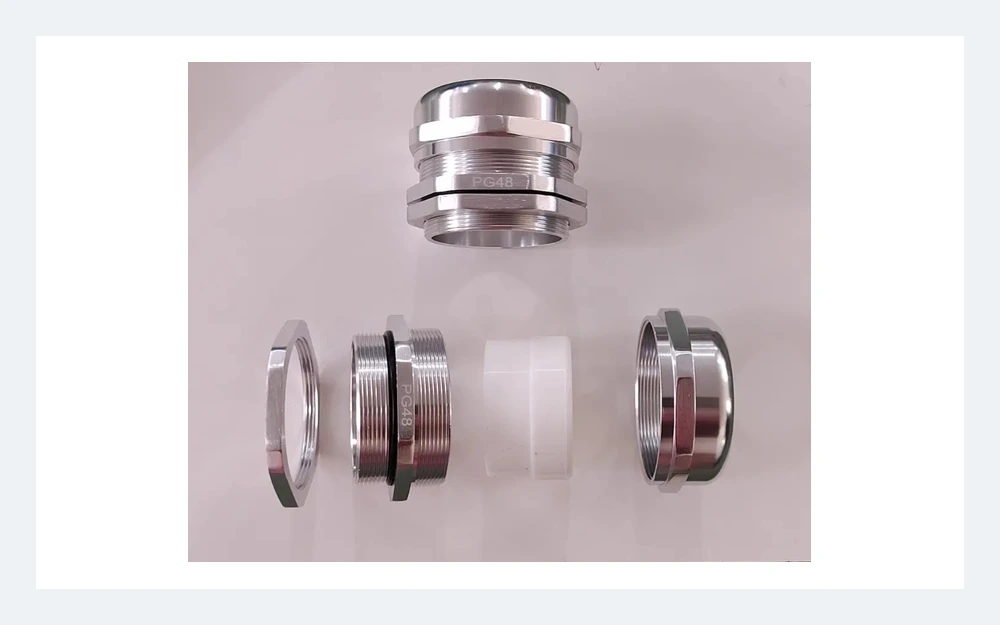
Many cable gland problems start before installation. The buyer selects a thread size from a catalog, but the real cable outside diameter, panel hole and wall thickness are not checked together. A gland can look correct on paper and still leak or loosen if one of these details is wrong.
Start with real cable outside diameter
Do not choose a gland only by cable name or conductor size. Measure the real cable jacket outside diameter, especially when the cable has shielding, thick insulation or a special outdoor jacket. The cable should sit comfortably inside the sealing range, not at the extreme minimum or maximum.
Confirm the thread standard
Metric, PG and NPT threads are different systems. If a replacement gland is being ordered for an existing enclosure, check the old gland marking, thread pitch or mounting hole drawing. For new sheet metal panels, metric threads with locknuts are often easier to standardize.
Panel thickness decides thread length
Thin sheet metal usually works with standard thread length. Thick plastic boxes, cast aluminum enclosures and outdoor cabinets may need long thread cable glands so the locknut has enough engagement after washers and gaskets are installed.
What to send for RFQ
Send cable OD, thread type, panel thickness, material preference, quantity and application environment. A photo of the cabinet entry point helps confirm whether standard thread, long thread or a reducer is needed.