
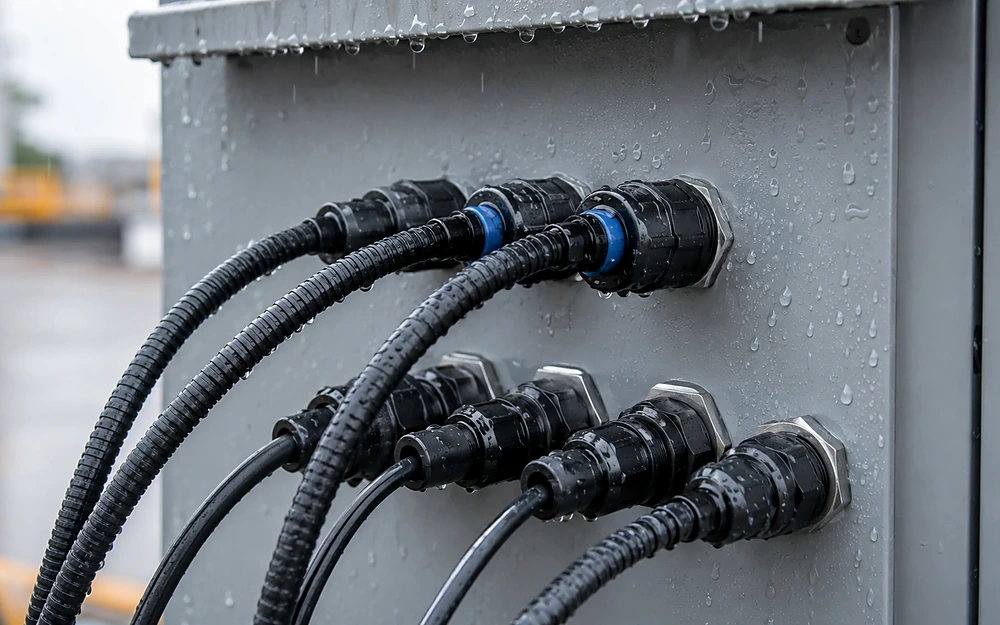
When water appears inside an electrical enclosure, the cable gland is often blamed first. Sometimes the gland is defective, but more often the leak comes from size mismatch, missing sealing parts or installation details around the panel hole.
Wrong cable diameter
The sealing insert must compress around the cable jacket. If the cable is too small, compression may be weak. If the cable is too large, the seal can deform or split. Measure the real cable OD before choosing the gland size.
Missing or uneven panel washer
The gland body seals the cable, but the washer seals the panel side. If the washer is missing, pinched or installed on a rough hole edge, water can enter between the gland shoulder and the enclosure wall.
Loose locknut after vibration
Pumps, motors and mobile equipment can loosen fittings over time. Long thread, correct tightening and suitable washers help keep the panel-side seal compressed.
Inspection before replacement
Check the cable jacket, washer position, locknut engagement, panel hole shape and unused holes. These points identify whether the solution is a new gland size, a better washer, a long thread version or improved installation practice.